Guiana highlands. No roads, but loads of rainforest, savanna, and one big fat river, the Ventuari, major tributary of the Orinoco. An 'isolated place', hidden behind waterfalls and within a fortress of tabletop mesas, home to the Ye'kuana people (ca. 4000). I've been working with this one village (Jodoimenña) since 1998, documenting biodiversity, working on antimalarial projects, solar-oven workshops, education... Here, some shots from our latest 'expedition' in June of 2006. A two week collaboration with the community and 3 students from Cornell. Read on...Image (c) Val Druguet.
 More than mud huts with a lot of jungle around them: something Priceless. An ecological civilization. Living simple don't mean living poor.Image (c) Val Druguet.
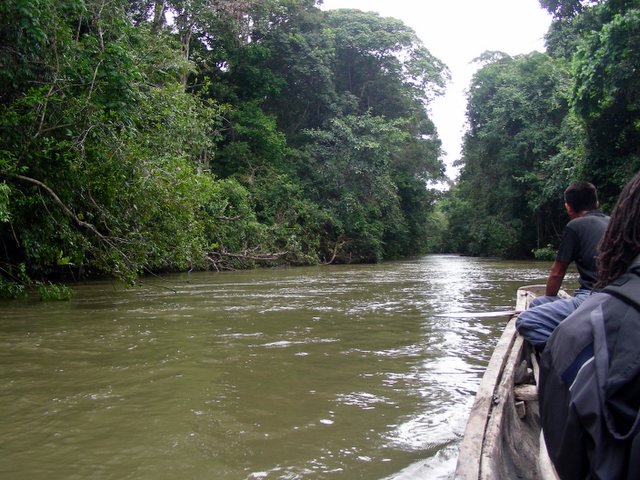
 The Ventuari, 50 yards from the village. In a world of thick rainforest, and savanna, all the water in the world. The river is lifeblood, navigational artery; its symbolizes directionality, the passing of time, origin and destiny. It is a harbinger of identity - and origin of the word Yekuana itself -'people of the river'. It carries the meaning, quite literally, of existence. NB: It is also where we and the village bathed every evening...Image © Val Druguet.
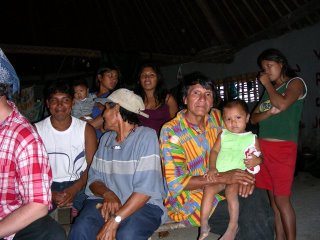 Ca 60 people live in the town of Jodoimenna. All are more or less related to Isaias Rodriguez, the headman. From left to right: Freddy Perez, Yani and baby, Gonzalo (turning head), Torivia, Ignacio (second elder) with grandson, Carbajal's young wife (name?). We have been working with this village (and extended family) since 1998. Blame it on friendship. One trip a year. We just spent 12 days there, once again, collaborating on matters of resilience, health and sustainability.
Image (c) Val Druguet.
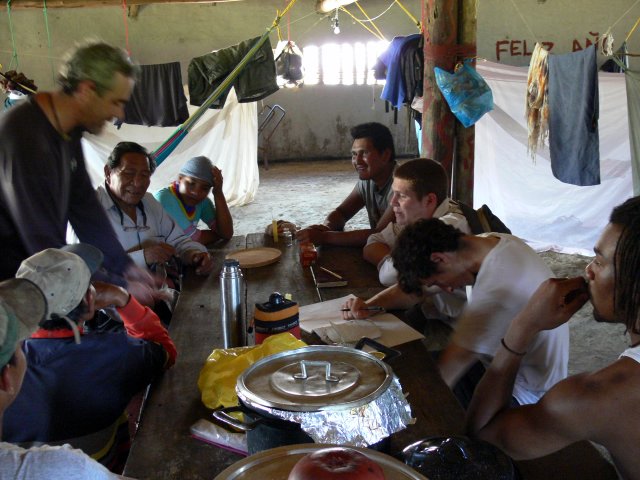
 Day 1: We come together, Val, Myself, the 3 Cornell students - Derrick (Specializes in herps and learning GPS/GIS), Hans (graduated a horticulturist) and Shern (anything that moves is his, especially if it has 6 legs), with Chief Isaias and his extended family. We talk about the 2 weeks of work ahead. The plan: finish the community map; finish research and data collection for a school book illustrating and explaining - in Spanish and Yekuana - the common plants and animals of the land and their significance; putting Hans's expertise to use in sowing some anti-malarial plants, consulting with Isaias on farming of fruit trees and, last but not least, a solar oven workshop with the women. Hut! ... Two days into the program, the students' resolve is rewarded with the Yekuana re-baptizing them with Yekuana names: Hans becomes Anedai (crocodile), Shern Yadiwe (gator), Derrick Wasahede (the black racer). Touchdown!Image (c) Val Druguet.
 ...is made up of 1.8 billion year old sandstone. It comes in different colors and shades, textures, temperatures, smells and manifold degrees of pleasure and pain. Regardless, to secure it as Yekuana, not for ownership but simply as a 'tomorrow', the community of Jodoimenna has asked that Me, Val and our three students help define and demarcate every layer of the landscape (GIS), including the sacred ones (hilltops, passage ways, streams and song-lines). With this mapping technology they will claim usufruct (from spiritual to physical 'usage') to the Chavez Government and obtain subsidies for a sustainable future: aid for medicine, sustainable animal husbandry, an economy of scope... Word is out they will succeed.
Image (c) Val Druguet.
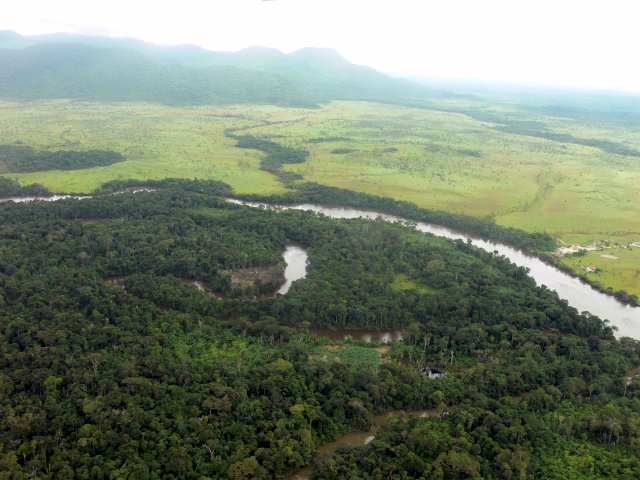
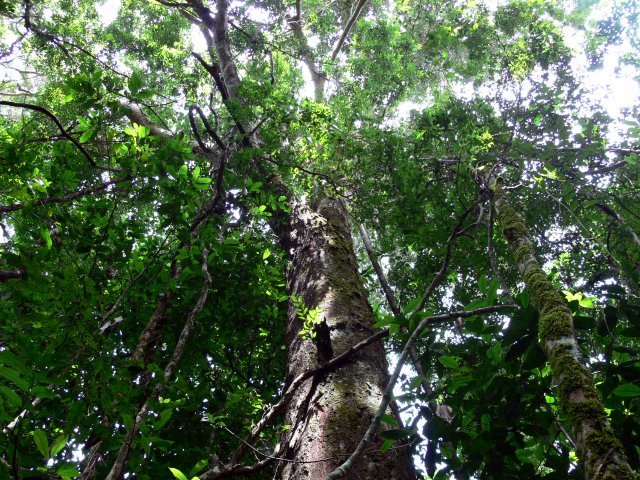
 View of the Guachamo river (tributary to the Ventuari) and forest. Jodoimenna has approxoimatley 35 acres of land, 60% of which is rainforest. Btw, if you do come to the jungle, forget Joseph Conrad. Throw out all passed projections of somber psyches and tormented minds and neurotic souls (just keep Brando as Kurtz is all that I ask). This dark place in fact is a palace of light, a theater of, by and for photosynthesis. Green Hell my ass. This thing is one giant salad bar, with generous, mammalian layers of folded complexity generated by gazillions of photons - just add some water from inbound comets and carbon atoms uprooted from the soil. This place is yours and ours and all of the above. No more, no less than a light and lofty, ethereal arena built from light through which energy becomes matter, continues to matter, and so, btw, does the shining gift of a meaningful life - give or take a few snakes, bullet ants, jaguars, gravity and the challenge of knowing your own, certain death. Whatever life has been given to you…just give it back (You can always tell your’ kids it’s called 'reciprocal altruism').Image (c) Val Druguet.
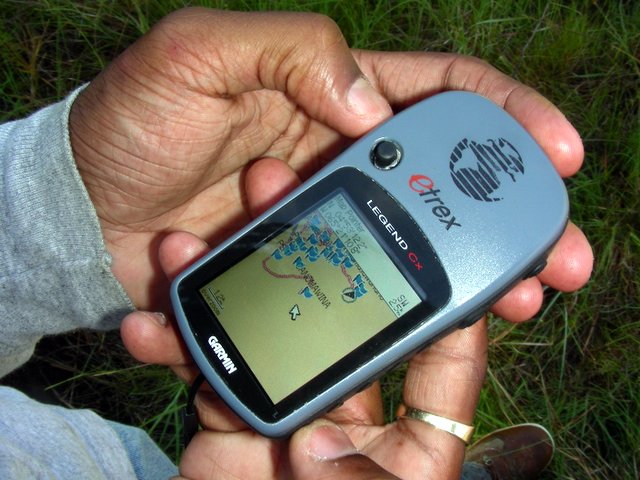
 Derrick and I finish up the map with Lisardo. Two weeks of very hard walking. Sometimes I wonder: are we OK with GPS and GIS and teaching the world how to make a map by US standards and helping the community reclaim the 'use' of their land; ultimately, aren't we just stuffing another machine full of binary code again??? Feedink Big Bruzza. Said the cynic: let's make sure we digitize the world before we completely screw it up, I mean, delete it. And preserve the virtual in silica, its cleaner. To which you might add: there are 2 kinds of people in this world: Prophets and non-profits. Image (c) Dave Rosane.
 Chaos, death, fornication, creativity - an equatorial jungle, the best feedback loop of the past 5 billion years. Just ask Verner Herzog! In Celluloid we trust. Seriously: this place has a purported plant diversity of 5 -6000 species of plants, and more than 500 of birds. Not to mention insects and everything else. In dizziness we trust.Image (c) Val Druguet.

Cerro Faru, the mountain that leads to Heaven. A sacred Tepui. How do you tell the institutions of today and the bureaucracies and corporations of tomorrow that a mountain is yours even if you don’t own it or never climb nor dig through it nor mine it to smithereens? One possible solution is to put it on a map and say so. Time will tell: Yekuana territory is coveted (to say the least) for its huge mineral deposits and uranium.Image (c) Val Druguet.
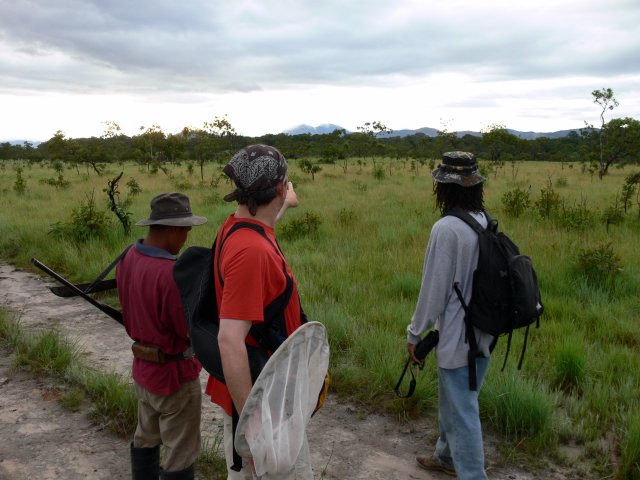
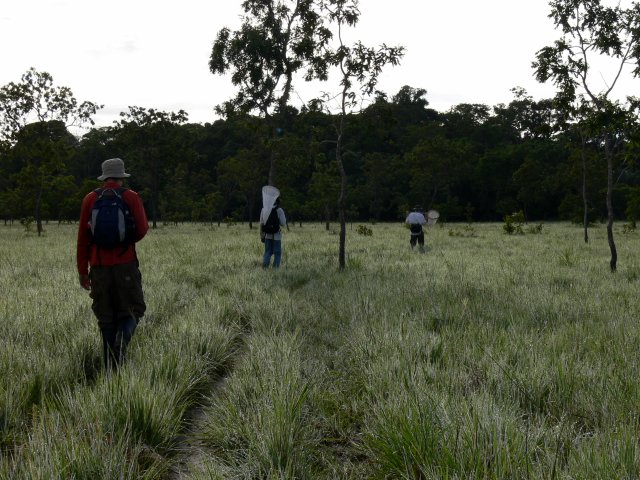
 Every morning we set out: GPS for mapping, butterfly nets for catching, eyes for observing, notebooks for remembering, nerve ends for feeling, brains for dialogue and understanding. Us folk and Yekuana alike. Coming together, exhanging, pollinating. Peacemaking, the opposite of war and exploitation.Image (c) Val Druguet.
 Shern and the girls... The Yekuana tend to avoid body contact in everyday life, they are neither a culture that touches nor embraces nor hugs. Cornell Students ? Just the exception that confirms the rule, confer the ensuing giggle fit.Image (c) Hans Spalholz.

Gonzalo and Derrick talk about snakes, snakes and more snakes, the magic involved, and the universe at large. Gonzalo had offered to heal the three students from a mild bug the first few days. He interpreted their bad dreams and disease as one: 'Travel to a new land and the enemy awaits you. Here, the enemy is the snake Mawadi, the Anaconda, the embodiment of ill-reputed spirits. If you dream of a lover, the snake will pounce. If you dream of snakes, a new lover hides in ambush'. Other villagers soon reminded us: 'It is one thing to know about snakes, another is to know how to live with them...' The next night a deadly Lancehead (Bothrops atrox) was found in the village at night and promptly dealt with. ‘We cannot forgive snakes so they must die. They are the ultimate danger, more than malaria, than any, any other disease.’ -Chief Isaias.Image (c) Val Druguet.
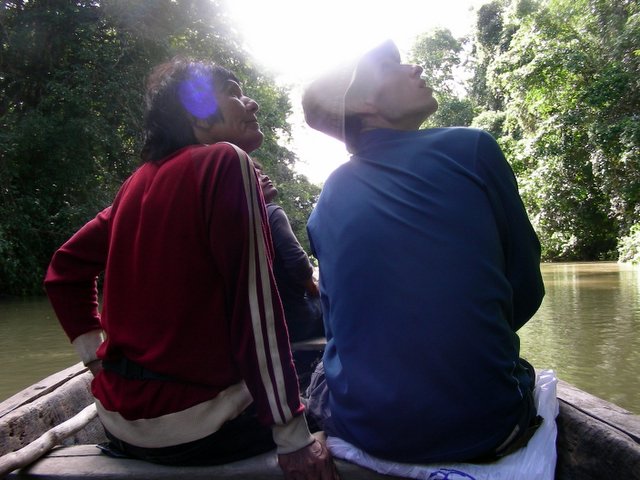
 Hans hangs with Ignacio (tribal elder) at front of boat. Neither of them speak Spanish nor their respective tongues, yet they find a way to communicate all day. Sign language. Universal Grammar. Whatever. They want to communicate, so they do. Both find knowledge rewarding plus the highs and buzzes you get from calling something out by name. End of the day, Hans comes away having learned more than 40 plant names in Yekuana and how they have helped these people survive in the forest for millennia. ALL three students btw completed their own science project during the stay (we didn't get much sleep). Derrick on snakebite and health, Shern on ethno-entomology and the use of 'hunting cures', Hans on yekuana agromedicinals, neutraceuticals and magical plants. The village accepted that knowledge and this blog be 'brought back', with the caveat that we return and exchange more. Indians are very tired of being exploited. Wouldn't you?Image (c) Val Druguet.

Example: Shern catches Thoas Swallowtail. File under Matutu (yekuana for butterfly). Picture enters schoolbook, animal into one man's education and life. Big game for both parties.Image (c) Val Druguet.

Members of the Jodoimenna community rely on horticulture (slash and burn), fishing and hunting for sustenance. Their 'wild'life is their diet, their medicine cabinet, their content piece for intellectual and spiritual life - what we call the environment they call home. Here, the hunting of one Great Egret will provide one family with enough protein for 2 to 3 days. Contrary to common belief, indigenous cultures don’t eat less than enough, they eat just enough. Problem is, our vision of a healthy diet (of what, basically, constitutes ‘sufficient’ food) is largely biased by our own over-consumption. Nevertheless, the Yekuana hope to shift to sustainable animal husbandry in order to better preserve their 'game' well into the future. Just playing it safe.Image (c) Val Druguet.
 Freddy Perez and Klini Rodriguez look for insects to capture and photograph. Documenting local biodiversity - and the cultural relation to it, have become the major and all-encapsulating component of our project. Shared knowledge of 'resources' (for lack of a better word) ultimately determines a people's politics, value system, education and above all, general cultural resilience. In simpler words: that which can be named as part of the Yekuana landscape reinforces language and therefore identify - and sovereignty. I speak and name my surroundings, therefore I am.Image (c) Val Druguet.

Marpesia chiron. Just one of hundres of species of Lepidoptera found in Jodoimenna.Image (c) Val Druguet.

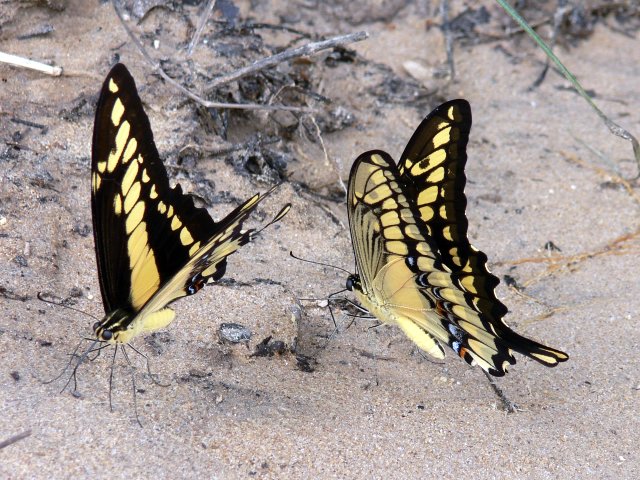
Two Thoas swallowtails 'mineralizing'.Image (c) Val Druguet.

Neither Gonzalo nor Ignacio, our two yekuana elder scientists, had a name for this bloke. Photo (C)Dave Rosane.
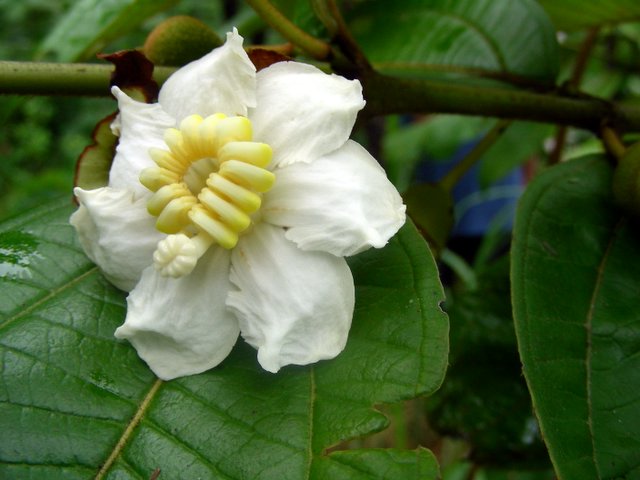
 Maybe in the Blakea or Loreya genus. In Yekuana, that's Kadade teewennejen camjönö, or 'tree that never grows'. Duh.Image (c) Dave Rosane.

A sacred plant for the Yekuana, the Monkey ladder (Entada gigas) liana was used in Yekuana Mythology by the star people to escape to heaven - and become the small stars that we see at night.Photo (c) Hans Spalholz.
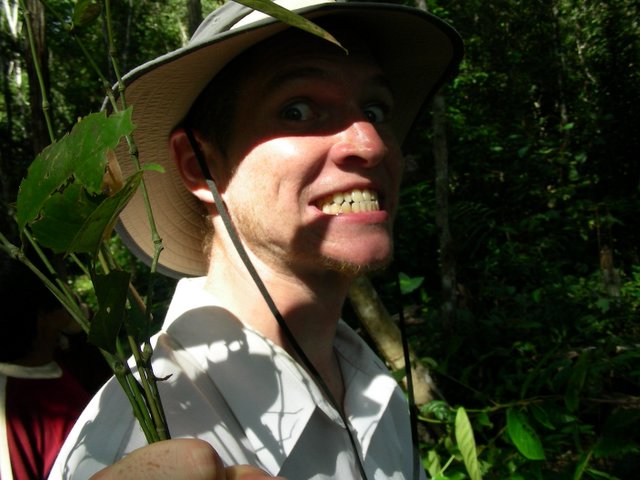
 Here posing as a mad scientist -- or perhaps becoming one, while holding up a stem of Piper piscatorum (Yekuana name: Wanaa wanadi). The plant is used for a variety of 'cures', including ramming it up a dog's rectum prior to a hunt - apparently helping to improve the unfortuante canine's ability to sniff out prey. Poison dart frogs can also be used as big game suppositories. Dick Cheney take note.Image (c) Hans Spalholz.
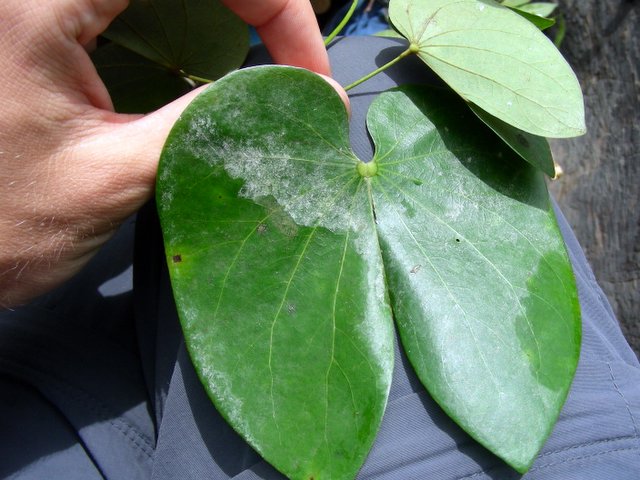
 In Ye'kuana, that's 'Waadi'. Image (c) Dave Rosane.
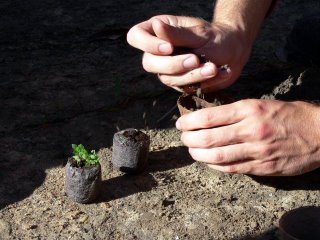 As Yekuana populations aggregate in valleys, moving from the small and isolated mountainous villages of yesteryear into modern-day supervillages and 'cities', as they travel and interface more and more frequently within the western world, they become the hosts, vectors and breeding grounds for 'new' diseases such as Malaria, Dengue, novels strains of influenza, etc; yet they remain twice removed from the distribution of big pharma and her expensive 'treatment' of these 'white-man's' diseases... In Jodoimenna, however, community leaders have welcomed our offer to help them seed some Artemisia, an effective herbal malarial preventive used more and more throughout the 'developing' world. Two problems must first be solved, however: 1) getting a temperate plant to grow successfully in tropical latitudes, 2) then working to prevent its spread as an invasive pest if it does. Tell you what: we're working on it. At least Hans, our student agronomist from Cornell, seemed to know what he was doing (his caring hands photographed above).Image (c) Val Druguet.




.jpg)
.jpg)
.jpg)